


.svg)

contact@blackcoffeerobotics.com

India, USA
What I like most about robotic simulations is their sheer ability to make the software development and testing process time-efficient. Working with robots (to a large extent on prototypes, and often remotely) over the last decade has helped me come up with a simple rule: “Do as much as you can with the simulation, use the actual robot hardware when you absolutely have to.”
Software for robots HAS TO run on robots, there is no way around it. However, there is plenty of simulation-based testing that can expedite your route to software deployment on the robot and robot deployment on-site. I've spent the bulk of my time working with mobile robots and manipulators, and my choice of simulators for application development and testing is centered around that. Without further ado, let me introduce some of the robot simulation software that have helped me rapidly prototype applications.
Before diving into simulators, it's important to note a significant transition in the robotics community. ROS1 officially reached end-of-life on May 31, 2025, with ROS Noetic being the final distribution. The ROS team no longer provides updates, security patches, or support for ROS 1. If you're still using ROS 1, migration to ROS 2 should be a priority to avoid exposure to unpatched vulnerabilities and ensure continued community support. You can visit our blog for information on migrating from ROS1 to ROS2.
ROS 2 has now become the standard, with distributions like ROS 2 Humble Hawksbill (LTS, supported until May 2027) and ROS 2 Jazzy Jalisco offering enhanced modularity, real-time capabilities, improved security through DDS middleware, and better support for multi-robot systems. The simulator landscape has adapted accordingly, with most modern simulators now prioritizing ROS 2 integration.
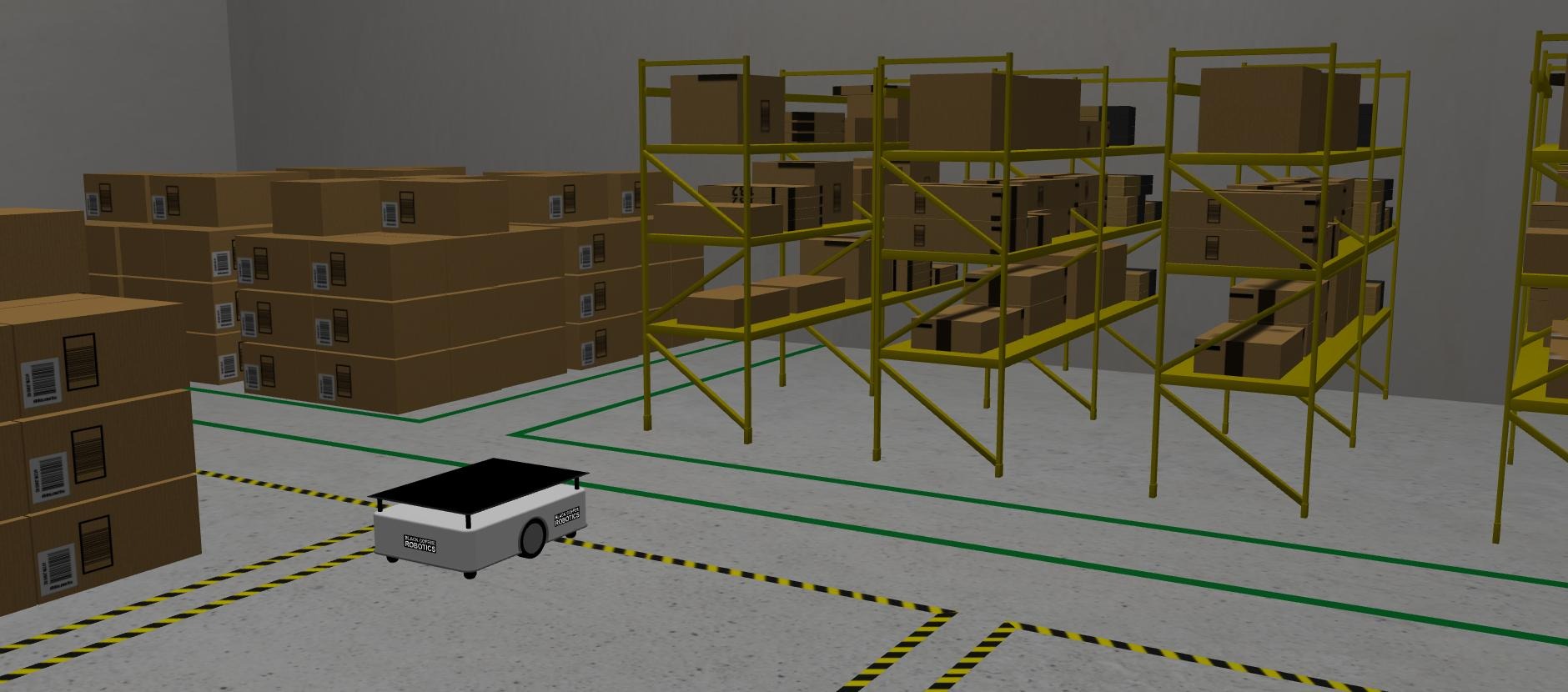
Perhaps the most famous robotics simulator out there, Gazebo has evolved significantly. The original "Gazebo Classic" has been succeeded by the modern Gazebo (formerly known as Ignition Gazebo), with the latest LTS releases being Gazebo Harmonic (supported until September 2028) and Gazebo Jetty (supported until September 2030).
Gazebo provides a 3D physics engine and rendering to support nearly all robot types, land, air, and water. Modern Gazebo versions use more advanced physics engines (including ODE, Bullet, and DART) and offer users the ability to use a range of sensor plugins such as RGB-D cameras, 3D LiDARs, GPS, IMU, and several others. Gazebo has ROS 2 integration through the ros_gz bridge packages, which enable seamless communication between ROS 2 and Gazebo.
The challenge lies in the computational burden that comes with the introduction of a higher number of robots, and the limitation that comes with using camera data. Gazebo worlds aren't always the most accurate representation of reality, which can make it difficult to test vision-based algorithms.
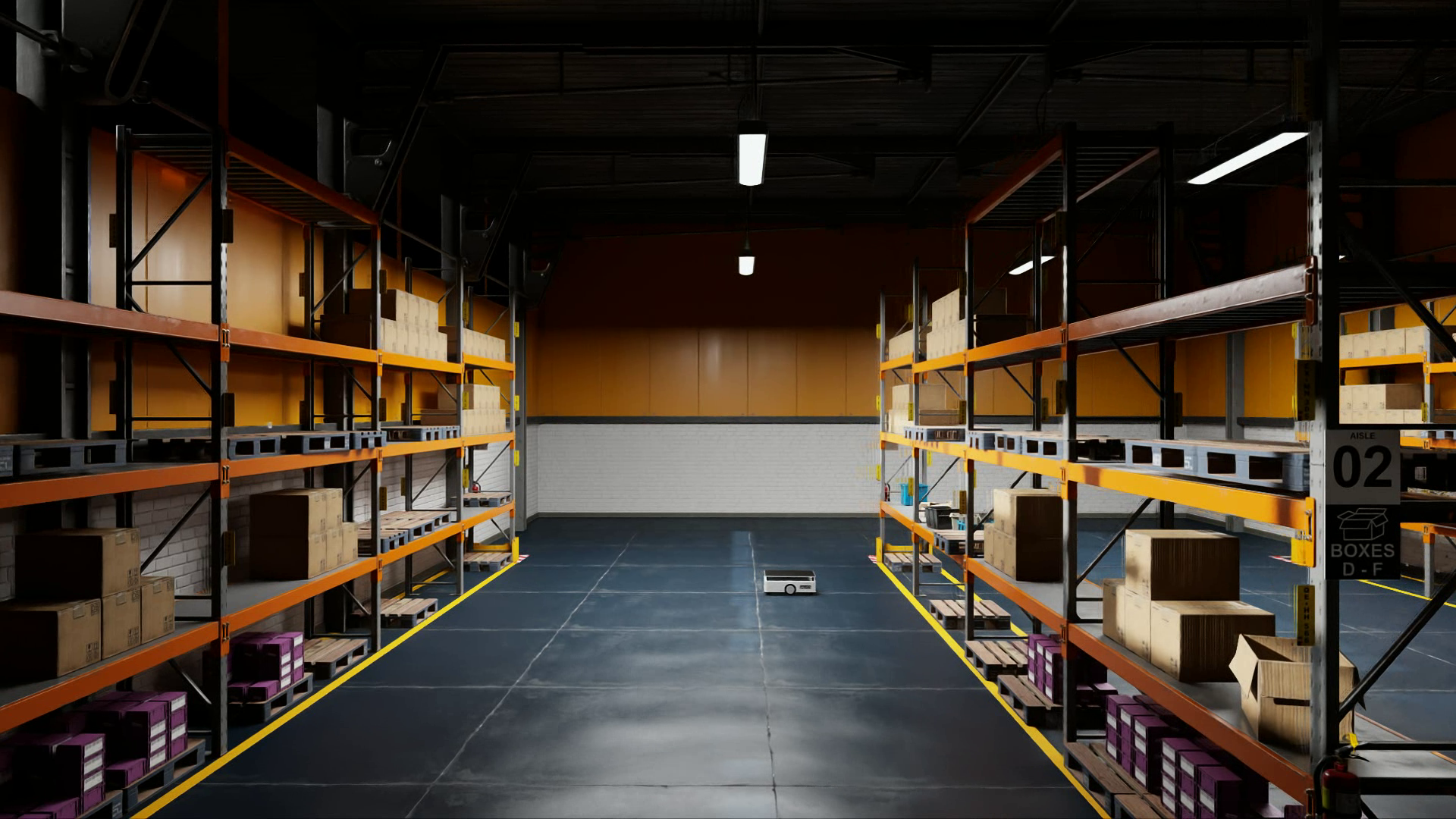
NVIDIA Isaac Sim has emerged as a cutting-edge simulation platform built on NVIDIA Omniverse. Released as open-source in 2025 (Isaac Sim 5.0), it represents a major leap forward in robotics simulation capabilities.
Isaac Sim provides GPU-accelerated physics simulation using NVIDIA PhysX, photorealistic RTX ray-traced rendering, and comprehensive ROS 2 integration through its ROS 2 Bridge extension. The simulator is built on Universal Scene Description (OpenUSD), which enables developers to design, import, and share robot models and virtual environments with ease.
Isaac Sim is particularly well-suited for AI-powered robotics, perception model training, large-scale multi-robot systems, and applications requiring photorealistic rendering. The simulator enables training robots in virtual environments before deployment, significantly reducing development time and cost. However, it requires substantial GPU resources (NVIDIA RTX GPUs recommended) and has a steeper learning curve than simpler simulators.
.gif)
While not strictly a "robotics" simulator, Unity has gained substantial popularity in the world of robotics simulations. Functionality-wise, Unity finds its edge in high-fidelity rendering, a robust physics engine, and the ability to model any robot type.
Unity comes with an existing developer community and software resources. However, since much of existing Unity development is based around gaming, most of the available assets (environment, objects, etc) are not a ready-made representation of a real-world scenario where a robot would find itself. The Unity-Robotics community continues growing, with more robot platform vendors releasing official models compatible with Unity. The primary challenge with using Unity remains the need for high processing power to truly leverage the aesthetic benefits, and the ROS 2 integration requires more manual setup compared to purpose-built robotics simulators.
Unity excels at creating visually stunning demonstrations and simulations with human-robot interaction, making it ideal for showcasing work to potential customers or stakeholders.
MuJoCo (Multi-Joint dynamics with Contact) has become one of the most influential physics simulators in robotics research and reinforcement learning. Originally a commercial product, MuJoCo was acquired by Google DeepMind in 2021 and open-sourced in 2022, making it freely available on GitHub under Apache 2.0 license.
.png)
O3DE is an open-source alternative that has gained significant traction in the robotics community. Governed by the Open 3D Foundation, O3DE is freely available on GitHub under Apache 2.0 and MIT licenses, making it completely free with no licensing fees.
O3DE provides native ROS 2 integration through its ROS 2 Gem, offering pre-built components including 2D/3D LiDAR, RGB-D cameras, IMU, wheel odometry, GNSS, and contact sensors.
The O3DE 25.05.0 release (June 2025) added standardized simulation interfaces for ROS 2 developed in collaboration with Open Robotics, NVIDIA, and Robotec.ai. This makes O3DE interoperable with other major simulation platforms. O3DE has been showcased at multiple ROSCon conferences with impressive large-scale multi-robot warehouse demonstrations.

A lightweight 2.5D simulator designed specifically for wheeled mobile robots, Stage was popular for its seamless ROS 1 integration. Stage provided ROS APIs to command velocities, returned ground truth pose of the robot, and came with a 2D-LiDAR plugin to emulate laser scans. The limited set of perception-oriented features and minimal compute requirements made Stage a great choice for multi-agent systems.
Current Status: With ROS 1's end-of-life, Stage is becoming less relevant for new projects. For ROS 2 development, consider the modern alternatives listed below.
Limitations of Stage, as one would expect, lie in emulating Cameras, 3D LiDARs, and non-wheeled robots. It simply isn't built for that.
PyRoboSim is a lightweight, Python-based 2D mobile robot simulator with native ROS 2 support, serving as the modern replacement for Stage. It enables rapid prototyping of task and motion planning in 2.5D environments where navigation happens on a 2D plane with height-based manipulation.
PyRoboSim supports multiple path planning algorithms (PRM, RRT, RRT*), includes 2D LiDAR simulation, and has minimal computational requirements making it ideal for multi-agent systems and behavior testing. Being Python-based, it's easily extensible and actively maintained (latest version 4.3.2).
Limitations: It's limited to 2D mobile robots and cannot simulate complex 3D sensors or non-wheeled robots. Best suited for high-level behavior prototyping rather than physics-accurate simulation.
The above discussion is non-exhaustive and doesn't cover all the robotics simulators out there. CARLA and LGSVL are simulators developed with a focus on self-driving cars. They aren't well-suited to work with off-road applications or indoor environments like factories/warehouses.
Webots is another robotics-oriented simulator that has been open source for several years, making it more accessible than before. It offers good ROS 2 support and remains a solid choice for educational purposes and research.
CoppeliaSim (formerly known as V-Rep) is another popular robotics simulator that can be worth checking out if you're looking for simulators in the mold of Gazebo. It supports ROS 2 and offers a unique approach with integrated scripting capabilities.
PyBullet provides a lightweight Python interface to the Bullet physics engine, making it a good choice for rapid prototyping and reinforcement learning research, though it lacks the visual fidelity of other options.
The robotics simulation landscape in 2026 is more diverse and capable than ever, with options ranging from lightweight solutions for quick prototyping to photorealistic GPU-accelerated platforms for AI training. Choose based on your specific needs, team expertise, and computational resources available.
Whether you're migrating from ROS 1 to ROS 2, evaluating simulators, or need a custom simulation environment, we'd love to help. Get in touch to discuss how simulation can transform your robotics workflow.

.webp)
contact@blackcoffeerobotics.com
India, USA